
What is the role of Sales Reps in the Modern Dealership

What is the role of the sales rep in the Digital Dealership?

At this year’s AED Summit, I ended up in the same conversation several times.  It took one of two forms.  First, the question was raised, what is the role of the sales rep at dealerships in the future? The second, even more blunt, do sales reps still have a use?  If they do have a use, what is it?

Let’s start off by saying, absolutely, sales reps are still important and will likely remain important.

Yet, the fact that these questions are being asked suggests the role of the sales rep must change.  When I spoke to dealers, reps and even some customers, over the course of the event, it became clear that customers are changing.   Modern customers, typically next generation owners or their buyers, have no use for the coffee-bringing  and unprepared rep that comes for a chat and to ask “do you need anything”.    Customers now have access to all the information they need about the equipment they are interested in.  From numerous websites, social media and videos a contractor can research to their heart’s content.  They find specifications, performance review, instructional videos and opinions.  They use this information to make their purchase decision, often without the need or involvement of a sales rep.  In a 2014 survey by the Acquity Group, only 12% of all respondents wanted to see a sales rep.  The rest wanted to do their research and get various forms of on demand support.  Imagine how much that has changed in 8 years and with Covid’s acceleration to digital.

When I was responsible for parts in service in Canada years ago, I loved getting invited by sales reps to meet their customers. When we arrived, conversation was always lively, with customers expressing their problems and concerns and we were able to discuss solutions.  Sometimes these meetings took several hours but there was always value.   I started to realize that customers were busy, knew their business and valued their time.  When the conversation was valuable customers were happy to receive us, if not, they had work to get back to.  It’s this question of value, the value we bring when we visit the customer that is changing the role of the sales rep.  Providing value gives us access to the customer’s time and allows us to build a relationship. 

Years ago, sales reps were the ones with product training and access to specifications and brochures.  Their value derived from having access to information that customers didn’t have available.  As the internet has taken over a huge part of that role, the value of brochure bearing sales reps has dwindled.  The new opportunity is the role of Trusted Advisor.   This role can focus on different aspects of the customer’s business, but typically it’s based on providing customers with a more in-depth understanding of their equipment and fleet in the context of their business.   For the sales rep it’s a golden opportunity to develop a richer relationship with customers, by bringing more value to their customers, but with a new perspective. 

For dealers and manufacturers this transition comes with several challenges.   The first is recognizing the change is happening and unavoidable.  Second it will require restructuring and retraining salespeople and finally dealers will have to become more knowledgeable about their customer’s business and put information in place to allow salespeople to bring new valuable insights to their customers. 

This first challenge might be the hardest, it’s one caused by a generational and expectation gap between senior leaders at dealership and the age and expectations of the buyers and decision makers at their customers.   If dealers continue to believe their customers think and act the way they used to, they will make the mistake of continuing old sales models.  They risk continuing to provide sales teams with only modest product training and nothing of further value and they risk having customers who see no value in the sales rep or the dealership.

Once dealers and manufacturers wake up to the new reality of their customer’s expectations, the second challenge begins.  It starts with redefining the role of salespeople, it means recognizing the new and changing channels of communication customers prefer and identifying the areas of knowledge reps need to be trained in.  To some degree this will require sales teams with different backgrounds and skillsets.  They will have to be able to understand construction, contracting and fleet finance.  Dealers will have to invest in more training than in the past. 

Finally, after recognizing the change, dealers, with the support of manufacturers, will need to create tools and information that exceeds the capabilities of their customers. These tools will need to be accessible to salespeople in real time, as customers are more informed and want to transact faster.  The information will have to give the sales rep and the customer new insights into fleet management, finance, and project or production costs.   Armed with this information the rep will continue to be a valuable resource for their customers.  They will continue to be welcome. 

Once implemented, this new role for dealers and reps will provide even deeper relationships, not only based on friendship and personality, but on knowledge and understanding.  For those dealers that make this change soon it will be a source of competitive advantage and differentiation.  What’s clear is customers are making or have already made the change.  Their expectations are different, how they prefer to engage has changed more than dealers think. 
Metrics are NOT integrated Data

This year I attended the AED Summit and again spoke on the Topic of the Digital Dealership.  Before going, I wrote in my last blog that I wanted to look at the impact of 2 influences on the equipment industry in my presentation.  These influences are changing the landscape of the industry and all dealers need to plan for these changes.  The first was the changing customer expectation of being able to work and communicate with their dealer through digital channels.  This expectation has customers wanting to use websites, text messages, chat and others means to communicate, and the use of phone is almost dead.  The second topic was the use of information in the dealership, specifically integration. 

Information use at dealerships has been a long-standing topic of conversation, from print out reports to the use of metrics.   Dealers collect lots of transactional data and turn it into reports and metrics.  These metrics are presented to dealership team members who are supposed to use it to improve their performance and that of the dealership.    Frankly, this is not an effective way to drive performance improvement in organizations. 

Even fewer dealership go beyond metrics and reports by turning information into triggers (You can read more about triggers here).  Triggers capture the information gathered in reports and metrics and create action.  They either feed information into the right place for a person to take action, our automatically update systems.  

But there is so much more data available outside our transactional systems……

At the AED Summit this year I had the pleasure of walking around the CONDEX and seeing how many information providers we have in the industry.   Many companies collect information from the market and even from dealers to create large and valuable datasets for dealers to use in their business.  These datasets include market sales pricing, rental rates, operating costs,  auction values, finance costs and much more.  This data can predict market trends create heat maps and guide decisions.   During one of my many conversations with one of the companies we started reviewing their website. They told me dealers who subscribe come to their website to review data. So, I asked if anyone integrated the data.  I was stunned to learn that not a single dealership customer, of theirs, pulled the data back into the dealership DMS or CRM. 

Market data and so other sources of data have very limited value if they require you to log into a site and do manual searches or reviews.   This way, the data’s value is defined only by the provider’s vision and presentation.  Also, you can’t rethink what the data means and apply the analysis of the data to your day-to-day business operations or put it in the hands of people that it matters to.  

In this case, the companies I talked to  all have APIs available for integration.  This means your existing systems can call a lot of data or a small amount of information and inject it into the right place.   Here’s an example, in this screenshot from a DMS,  we have a function used for setting the advertised price on machines going to the dealer’s websites or to some of the machinery advertising sites.  By injecting live market pricing data into the screens, used by people in their daily activities, your team members can make better decisions.  They are rewarded with better performance from their activities.  The work required to get this integrated is usually small and is quickly paid back by the time saved looking this same data up on another website.   Then the performance increases gained by being more accurate with your pricing is all profit.  

Numerous other opportunities exist in our daily activities at the dealership.  For example, market rental rates integration with the functions where users review and set Rental Rates in your platform.  Even better, integrated where sales reps log their won and lost rental opportunities.  What about Engagement data from email campaigns?   Like data on opened campaigns integrated into your CRM so sales reps can see what their customers are viewing and interested in before they talk to the customer. 

Today’s market leading dealership need to learn how to make use of the vast amount of information available to them.   This information is more than nice to have or part of a quarterly review exercise.   Leading dealers will optimize all their interactions and engagements by using the information available to them.  These dealerships will be Digital Dealers, understanding the value of information, and in so doing get the most out of the huge amount of capital invested in their bricks and mortar operations. 

Are you using the information you have available? Do you have an idea to explore?   Connect with me on your preferred digital channel, even the phone.

Taking the first steps - Review where information is available and needed in your Digital Dealership

The Digital Dealership –  Information is the Core of the Digital Dealership


Perform an Information Audit to develop your Digital Dealership


In our last podcast about the Digital Dealership, Ron and I discussed what some of the first steps any dealership should take to become a dealership of the future.  Since the basis for the digital dealership is the complete use of information.  I suggested the first step should be to review how the dealership is currently storing and using key information. 

Key information, in the Digital dealership, revolves around the customer and equipment, and especially customer equipment data.  To become an integrated dealer, making the most out of the information available, information needs to be collected, analyzed and shared among all areas of the business.   It’s important that areas of the dealership don’t become information silos. It’s especially important that the different areas of the business don’t operate on disconnected versions of the same data. 

To do this means a few things

First, a dealership should always have a single database or “single source of truth” for each type of information.  Whether it’s customer, account, equipment or contact information, there should be one primary place to store that information, and no more.  Whether it’s equipment information on work orders, customer information and contact data in CRM or unit number information in parts, they all need to draw from and update the same single source.  This is especially true if the information is also needed in the other departments.

Second, information needs to be shared out to all departments to help make decisions.  The Sales team should see equipment information on machines serviced by the shop, they should see parts sales by machine from the parts department.  Service needs to know about machines sold to customers before they come in for their first service work, and everyone needs to know the engagement of customers on marketing and digital platforms.

Finally, information should be enhanced with data from outside sources and inhouse analysis should be performed.  When the sales team looks at a customer fleet list, they need to know how much should have been generated by each machine through parts and service, not just the actual numbers.  Sales should be able to see market price on equipment when they review a machine, not have to ask the office to get this.  Service should be able to see if customers have open quotes and deals on replacement machines when advising the customer’s techs about required repairs.  The Marketing department should see what activities are generated from their marketing activities or customer engagement.

To prepare you for your dealership’s journey toward becoming a digital dealership the first step is to review existing systems, available information and the areas where information is missing.  This Information Review identifies what needs to be done, where the problems lie and what systems are limiting your dealership’s efforts.   This review is often hard to do with in house people.  Most people are too busy running the day-to-day transactions in your dealership, but it’s also hard to find the things you don’t know to look for.  

If you’re looking for a detailed review of your information systems, a strategic plan of issues to resolve and initiatives to complete on your Digital Dealership journey, my Company Strategic Evolutions, can provide this service for you.  With a week onsite, reviewing your systems and talking to people from marketing to service, I’ll prepare a detailed presentation and provide recommended activities to make information an important driver in your dealership’s growth and future. 

Are you ready to see your Digital Dealership grow?


Mets Kramer


Defining Your Audience – Part 1 - Strategic Segmentation

YouR customers are only a small part of your Audience

All of us have heard the term “audience” over the last few years.  Long gone is the past association of audience with something the queen granted or with sitcom television.  An audience is no longer a small group of people because the internet has grown everyone’s audience.

Yet, even with the automatic growth of everyone’s audience, many dealers don’t think about their audience as they build their digital dealership.  Many of us think about our customers as audience.   Customers come through the door, call our phones and send us emails.  Our customers work with us daily, weekly or monthly as they use the equipment they purchased, or are looking for newer equipment.   Still, our customers are only part of our audience, even if they are a small and important subgroup.

The broader concept of audience is important for us to consider in several ways.  It’s important first when planning our marketing, second in designing operations and finally in developing our strategy.   For this article let’s start with Strategy, since it lays the groundwork for the rest.

The first thing to think about is how will you define or identify your audience.  What groups of people and companies will you want to draw in and communicate with?   This will vary depending on the type of dealership you have, and will need to be adjusted, as you reconsider who your audience is.  This is called segmentation.

For example, for a few large, well-established dealers the audience tends to be fairly set.  It typically consists of all the users of their brand of equipment, in their territory.  Potentially it might only include those customers with accounts in the dealer’s business system.  Another example is a smaller farm and yard equipment dealership.  Here the number of interactions with each customer will be lower, and the dealership needs to find new customers constantly.   A strategic approach to audience segmentation will be different for both these example dealers, but for both, clearly defining it lays the ground work for their business.

To define a dealership’s focus audience, we need to determine what audience segments fit into your strategy.  Start with these 3 audience segments or categories.   How important is each to your business?

  1. Repeat or Existing Customers

  2. Prospect Customers

  3. Unknown Audience (This is typically where your new leads come from)

Next, consider where your audience members are.

Are they:   Local, Regional, National or even farther?  How far do you want to reach? How will your strategy differ for those near you and those far away?

With all the audience segments identified, and priority segments selected, we can create a strategy for each of them.

For each segment the dealership wants to reach, 4 main things must be considered.   First the message, next the communication channels and third the response method.  The final item to be considered is an important part of what makes your dealership the Digital Dealership, it is the integration of known audience information with each strategy.

In creating the strategy dealers need to think about the message.   This is often the product they want to communicate to each audience segment.  Is the product the machine, the dealer’s experience or something else?   Many dealers think they are selling equipment when a significant aspect of value is the dealership.  When communicating to unknown audience members, they merely provide the details of a machine in inventory, they forget to include the more important value the dealership brings.

The strategy should consider the channel for communication.   Dealers should understand what digital channels and platforms their target audience segments are on, where the audience will see or receive the message.  Channels include traditional communications, social media, email etc.  Depending on the product and the audience segment, different channels should be used.  Don’t use the same channel for everything and assume your message reaches the audience.

An often-forgotten aspect of communicating with the audience is the response method.   Typically, the faster the response from the dealer is the better.  Also, the response method should more closely matched the original communication method.  For example, if people are reading your email, they likely want to respond the same way.   We often see dealers mismatching the channel and the response method and seeing poor engagement.

Finally, before we can look at marketing and operations in the next article, we always need to consider the most important aspect of the Digital Dealership, the use of information. This starts by having clear strategies for each segment.  By using the information already known about the audience to fine tune the strategy, we get a much more targeted strategy.   For example, sending marketing campaigns to customers and prospect customers about a new backhoe, to customers known to have backhoes of a replacement age.   Image if your next email campaign started with “Hi Mets, because you currently own a 2012 Case 580SN, we’d like to share information on this 2017 CAT 430F.

In my next article I’ll continue and look specifically at Marketing and advertising to segmented audiences.  I’ll also post a work sheet for your dealership to work through to get started.

Mets Kramer

Mets.kramer@strategicevolutions.ca

The Digital Dealership – Digital Data Triggers

The Digital Dealership - Digital Data Triggers.png

One of the best things about computers is they do the boring tasks of wading through data.  It’s a concept that is generally well understood, yet too many dealers are not applying this capability. 

For all the years I spent running departments at dealers, I was never a fan of reports.   Reports, to me, are long lists of printed out or on-screen data that I need to read through to determine if there are any actionable situations.  It’s time consuming, especially if done on a regular basis.  I’ve always preferred getting the reporting system to do the work for me. 

I LOVE indicators, indicators are the action items you get from a long boring report.   Indicators are the result of analyzing the report data and determining what we should do.  A great example is a customer account balance statement, where we look for people over their credit limit or with aged invoices.   Rather than read the whole list, we often just print the over limit customers and hand them to a credit manager or sales rep to call the customer.

In the same way, the Digital Dealership uses its data, computers and an analyst to create actions from data.  These action items are pushed out through various methods to improve the business or support the customer. 

There are 2 main types of actionable data.  First there are activity or event triggered actions and the second are analysis or derived actions.

Activity or event-based triggers are implemented often to follow up on past events.  Great examples are notification to the sales rep 30 days after a customer purchased a machine to schedule an initial service or follow up on performance. Similar triggers are post rental follow up, to find out how the customer’s rental experience was.    The Service department can do a similar follow up after a customer receives their maintenance inspection check list with quoted items found during the service.   If the customer declines them initially, the Digital Dealer follows up to make sure they got done, frequently gaining that work.  

The second type of trigger is derived from data or rather the analysis of historic data.  These are often more complex and look for changes in the historic norm to determine if something has changed, which would require action.   This is something we all do in the parts business, for example.  As sales of a part drop off, we analyze the data and, if the part is used on an old model, we determine the need to stock less of them.

Triggers based on data trend analysis often let us get ahead of a problem.   Think of a customer who normally purchases every 6 weeks but has shown no activity in the past 8.   The Sales Rep should be able to connect with that customer and find out why.   What about a customer who was spending $100K per year on service labor, but in the past 6 months it’s been $25K.  In these cases, it’s likely important to understand what’s happening.

Triggers, from analyzing data history or events and put in front of the right person, lead to action.  These action triggers can be as simple as an email notification, or, preferably these triggers are listed as exceptions on a digital platform such as your CRM.  In a CRM the indicator can easily lead to a page listing the customer’s contact information or even instantly connect the call.  Once the call is done an activity is created capturing the story from the customer, and possibly generating a new sales lead.

One of my favorite indicators in Vizybility is “Customer that need follow up”.  Set a contact frequency for an existing or target customer, and the CRM reminds you to call on that interval.  These are great to avoid missing sales for a low volume customer.

In all of these scenarios computers do what they do best, track and analyze data.   Analysts learn from the data and, in conjunction with a manager, create triggers when certain scenarios are seen.  These actionable decisions, or triggers, are fed to people in the operations through CRM or other systems to support customers, avoid problem. 

Next time you’re reading through a long report list and deciding what to do, think about how you could create automatic triggers in your Digital Dealership.

Billboard vs Engagement Digital Marking

“At the moment, our research shows buyers making 90% of their purchase decision before contacting the dealer.” And there it was. I had been having thoughts like these swirling around in my head for a few months now. But when Charles Bowles at Trader Interactive spoke with me, I had no idea how much our industry had shifted.  

I have a theory about Digital Marketing in our construction equipment industry and I believe it can be considered in two ways.  First, what I’d like to call Billboard Marketing, which refers to digital strategies geared towards establishing and maintaining a digital visibility.  These approaches are often additional marketing strategies, while continuing the existing methods of communication. The second approach is called Engagement Marketing and includes digital activities to connect and develop engagement opportunities with your target audience. Dealers who implement Engagement Marketing considers their digital marketing presence as transformative and suggests these methods could replace most, if not all, past marketing approaches.   

There are three aspects of digital marketing that I would like to look at and compare Billboard and Engagement strategies. They include Websites, Email Marketing and Advertising campaigns.  

Most dealers have a website today, which is a great start, but the buck doesn’t stop there. Listing your equipment, providing contact information and location falls under the Billboard approach: you present your information to visitors and hope they contact you. However, for Engagement Marketing, your website should provide a virtual visit to your dealership, images and videos of your inventory, and related documents showing the quality of the equipment and records of its health and maintenance. Icing on the cake would lead the visitor to a button they can click on to take them onto the next step. (Replace “Contact for more information” with “I’m interested in Buying”) But let’s be real, this call to action isn’t the icing, it’s the entire cake! How do you measure whether your leading your visitor into an engaging relationship? Make sure you provide ample information about the machine so they can decide on the spot. If there’s not enough detail, Bowles says 90% of visitors will go to check out another listing to find what they need. Hop onto Google Analytics to help you assess whether you’re Engaging or Billboarding.  

The next common aspect of Digital Marketing is email campaigning.  Email campaigns are a great way to stay connected to customers and present new products. To use email campaigns effectively, it is important to consider your audience and develop strategies in order to create a continuing conversation. Mail programs such as Constant Contact or Mailchimp provide the tools to send information to tens of thousands of people.  A Billboard approach sends the same message to everyone who drives by it – no matter who they are or what they are looking for. We don’t want to use email campaigns the same way. Instead, consider a more strategic approach, engaging different segments of your audience based off their interests. Provide a mixture of Equipment For Sale messages and industry, fleet focused education. Use the tools provided by the email platforms to understand who is interacting with your campaigns and change the messaging and frequency for each segment to further engage your audience. While email campaigns can feel like a one-way communication, change your mindset and remember, email is most effective as a conversation tool. So create campaigns that encourage your audience to talk back!  

Finally, Digital Advertising, whether Google, Facebook or others, are designed to bring visitors to your digital dealership: your website.  The Billboard approach will stop at bidding on generic words (ex. Caterpillar excavator, Komatsu bulldozer, Case backhoe, etc.)  which will hopefully bring visitors to your website to see what your dealership has to offer. But let’s keep in mind that digital advertising can be expensive, so the set up and focus of your advertisements should be focused for an Engagement approach. Let’s milk every opportunity! How about bidding on specific machines that are in your inventory? Specific combinations like Komatsu D65EX, for example, will have less bidders, making them cheaper and bringing visitors exactly to what they are looking for, the machine on your website.    

The digital marketplace is real and becoming the source of future sales.  All leading industries are showing signs of transformation into the Engagement model of digital marketing.  Automotive sales, Commercial trucks are some but do not forget about Amazon and similar services. We are all proof that Engagement Marketing and Sales keeps us coming back for another slice. 

Relationships are the key - The Digital Dealership makes them better

The Digital Dealership - Relationships are key.png

The Digital Dealership – The things that change and the things that don’t


I often hear, and most of us have said, the following word.  “The equipment business is a relationship business”, “Relationships make the difference”. 

Nothing could be truer about this industry.   Our products create long term relationships because each of the products have a long-life cycle during which we need to engage with and support our customers.  Relationships make all the difference during many phases of the machine’s life cycle.  I first learned this lesson dealing with 330 Excavator issues.  This work horse machine was relied upon by many customers, just it had lots of issues.  Cylinders, pumps and finals to name a few.  Having a strong relationship helped us navigate the problems with the customers and come up with workable solutions and agreements.  Through it all, we maintained the relationship and the next generation of the same machine still had lots of buyers. 

So, this is often what I hear from dealers when talking about the development of the Digital Dealership.  “Digital isn’t important, it’s a relationship business”.  As if relationship is all it takes to maintain a customer. If that were true, we would all still have a roll of quarters in the truck and be looking for pay phones to get a hold of the office and the customer, rather than get a cell phone to get better.

The Truth is, while relationships matter, the digital transformation has supported it all the way and needs to continue to do so.  It’s naive or “old fashioned” to get stuck in the glory of the past.   Just like your cell phone caused the demise of the Pay phone because it allowed you to do things better.  The rest of the digital world is there to support you .. Not replace you. 

This past week I sent my 4Runner in for service.  Just for fun I went online, found the nearest dealer, booked an appointment, chose my preferred communication method, got a quote for the service and discussed additional required services at my mileage.  Then I got to the Dealership and talked face to face with the person I’d been emailing with.   All my car information was entered, and we wasted no time.  I built a relationship with Jallone the Assistant service manager.  He looked after my needs and I tried to steal him from automotive to the equipment business, because he did a great job.  When the service was done, he followed up with electronic invoices and discussion on open items. 

The Digital dealership supports and improves your existing operations, it does not destroy the value of relationships, it only makes them easier to create and maintain. 

Take this example I heard from Alex Kraft at Heave.co this past week.   A contractor told him he’s been waiting for 3 weeks to get a quote from his sales rep.  All this customer wanted was an piece of paper (or electronic quote) for a machine, but the sales rep is too busy or the process too onerous to get a quote out.  How is it helping that dealer and customer not to have the dealership invest more seriously in digital systems to provide quotes faster.  In the end this contractor went to a new platform that exposed his needs to dozens of other dealers, who quoted him automatically or saw the Quote request and responded. 

Digital supports your business; it doesn’t take away from it;  unless you decide to implement it poorly. 

How else does Digital augment your relationship? 

A core aspect of the Digital dealership is the use of information.  As the equipment expert your customer relies on, you need to be seen  as the trusted advisor, not a quote provider or order taker.    Find ways to use digital information to be ready to support your customer with all the equipment related information you can.  Specs, performance, analysis, operating cost and market pricing data.  When you become the Digitally enabled Trusted Advisor, you’re always welcome. 

Oh, and don’t forget to have inventory info at your fingertips and be able to price something.  

Years ago, I had dinner with a colleague in Chicago during my only 1.5 years not in the construction equipment business.  He told me a story of being a young regional manager, sitting with his customer.  He proudly boasted about the improvement their business had made in delivery.  He told his customer “We can now ship any product we have in stock to you in a week”.  He was so proud of the giant gain in delivery speed.   His customer looked at him and laughed “You’ve got to be F@#%@ kidding me, from stock to out the door in seven days???”    Expectations is the point.  Your customers have a learned experience of what’s possible.  No matter how good you think you are, if someone is doing it better, that’s the new standard.

Creating a strong Digital Dealership, however that applies to your dealership, improves your relationship with your customer.

Information in the Digital Dealership - Equipment Data and Analysis

The Digital Dealership - Equipment Data and Analysis.png

When I started Strategic Evolutions in 2017, it was based on 2 things.   First, I wanted to help smaller dealers do a better job and grow their business. Second, I wanted to show people how to use information to do exactly that.   One of my first engagements was to speak at AED on the topic “A Granular, Data-driven Approach to Strategic Sales”.  The focus of my presentation was the value and importance of using information, specifically customer equipment data, to drive dealership activities.

Customers work with you, the dealer, for one reason: they own equipment. (And let’s not forget, it’s also because you’re great people!)

Numerous people in the industry have pointed out the value of customer equipment information.   Most frequently, and in the topic of my presentations, the customer equipment information provides a clear indication of future sales opportunities.   Our industry is focused on equipment with a predictable life cycle.  If you’re a dealer representing any OEM, you should be using this information by now, to drive potential sales opportunities and providing your sales reps with new leads.  Furthermore, by analyzing and predicting the replacement time of a machine, it’s the easiest way to make sure low volume customer aren’t lost to competitors.  Think about the customer with only a few machines, who doesn’t engage with the dealership frequently. These types of customers are often lost because they didn’t connect on time. However, if they had used a CRM system to notify the sales rep to reach out at the right time, we could have prevented this loss.  How do you get this information?  Either through the sales team or by digitally engaging with the customer.

Equipment information is just as valuable in aftersales at the dealership. We all know having this information makes parts and service support easier.  For example, customers call with unit numbers because they don’t use serial numbers to reference their equipment.  With a CRM, your team can quickly find the serial number of the customer’s unit from the database. 

From a marketing perspective, equipment data can help you measure the potential size of the aftersales market.  If you’re selling maintenance contracts, you already know how many dollars per hour of parts and labor each machine should produce.   With a complete fleet list, you can estimate total potential revenue and market share.    Now, you have a sales lead for your aftersales PSSR reps.

In the Digital Dealership, aftersales should also be utilizing equipment data.   By integrating the equipment data with your Digital Dealership, you can present equipment information in the online parts store, but more importantly, all over your Digital Dealership.  You can promote Parts Kits, PM kits or Maintenance programs to the customer when they visit.  As a comparison, the digital world’s success started when websites stopped being static and started to tune the content to each visitor.  It’s no different with your Facebook, Amazon and countless other social sites.  These businesses present you relevant information based on what they know about you.

To make this all work, it is as simple now as it was 20 years ago.  To build an information driven dealership, your systems need to be up to the task.  An ERP, DMS or CRM that can store customer fleet data is critical and should be a key item to consider when switching to a new Dealer Management System.  If your current system can’t handle customer fleet data, and you’re not switching, get an integrated CRM. Next, make sure you have your sales and aftersales teams think about collecting this data.  If it becomes a normal part of your conversations throughout the dealership, and a focus of your customer service, gathering the data gets easy.

Finally, invest in a partner or team member who’s full or part time job it is to analyze the data and implement programs using the data, with the business unit owners.  Your sales manager or product support manager needs support.  Most of the dealers I know have limited resources in house, so it might mean a new person or finding a vendor to help you.

One thing is for sure, and you see it all around you, the most successful businesses today, have a strong digital presence and use the information they have to their advantage and their customer’s benefit.   


Ensuring your Legacy - The Digital Dealership

The Digital Dealership - Ensuring your legacy.png

“In the past, the model for an organized business was a phone and a Rolodex (younger readers can Google what that is).   The new digital platforms like your Website, CRM and marketing tools are now the modern Rolodex”

When my team started our marketing efforts, I was stunned to learn there were over 15,000 equipment dealers of all sizes, in North America.  A huge number of these dealers were small organizations, of 1 to 5 team members, who do great business buying, selling, or renting equipment.  In this blog, I want to address the value of Digital Dealerships and brand development for small organizations. This is especially important for those of you who started your dealership and are trying to find ways for your business to support you into your future.  

Over the past few years, I have been lucky enough to work with many small dealers. I admire their tenacity; it takes a lot for these dealers to take their own fate into their hands. Often these dealers are smart and entrepreneurial; most come from larger dealers.  They saw a gap in the market, a niche, they could exploit and make a good living. Now their future depends on how well they execute.   For most of these dealers, their eventual legacy will be what sustains them into retirement and their future generations. 

So how does this related to the Digital Dealership?  

One of the great things about the digital revolution in our industry is the potential to become, with a little investment, more than a person with a Rolodex.  The Digital Dealership, or your digital presence, can help you extend your legacy well into the future in several ways.

First, your digital presence is like having an extra team member or sales rep.   Your existing and new customers can learn about you, answer questions they have for themselves and initiate communication with you all by going through your digital profile.   I have seen lots of small dealers work hard to keep up with quotes, rentals and inventory information in a very laborious way.  Each time sending emails with additional information like pricing.   A well created digital presence can take some of this burden off you.   Now, even if you are a team of one, you are actually a team of two, or even three.  Creating and investing in a Digital Dealership establishes an effective sales path that’s open 24 hours per day. Now, you can focus on getting out to see customers instead of being stuck behind the desk.

Second, for a small growing dealership with big aspirations, a digital presence and platform helps you standardize.  In many cases over the years, I have come across great dealers who are heavily dependent on one or two key salespeople.   Usually, these key players are the owners, or a highly effective salesperson.   The problem with this situation is repeatability.  If one key person exits the business, it’s hard to recover.  Creating a digital presence and a standard process, including CRM, makes your business repeatable.  It lets you add new team members, set a standard operating practice so you can repeat what’s working, with new people.  Your Digital platform can help to transition your customers and maintain the goodwill you’ve built over the years. 

By creating a digital presence and developing a consistent brand, you become more than just a one-on-one relationship. Your hard work over the years, and that of your team, creates a legacy which can be easily understood by new people joining the team. This lets your customers feel like they are still dealing with the original creator of the business, who they first trusted to serve them.  

More and more, we see new business relationships initiated from digital platforms.  Buyers are looking for solid information, in addition to knowledge and great service.  In the past, the model for an organized business was a phone and a Rolodex.   The new digital platforms like your Website, CRM and marketing tools are now the modern Rolodex.  They help you organize and maximize the efforts you have put into the business for many years.  Now you have the tools to have your business support you into the future.   

To build is to have something that lasts; to create a legacy.

Dealer Website - Comparing Machine Presentation

The Digital Dealership - Comparing Machine Presentation.png

One of the Statements I have made repeatedly in this series is: “The average buyer does 85% of their research digitally prior to contacting the dealer” (Thanks @Charles Bowles).     What does this mean for dealers?   In the most practical way, it means “Call for details” is dead.     Providing information is critical.

In this blog I would like to get each of you to do some research.   Considering my statement above, which of the following websites or products would you feel ready to buy (assuming you needed it) based on the digital presentation of the product.

To get started I would like to look at the used passenger vehicle market.  This is one market we all have experience in, and one that has seen a radical change over the last 10 years.  It has also been an industry leading the Equipment industry by 10 to 20 years, showing where digital technology is going in the future.

First let’s look at Carvana and CarMax, leaders in digital sales, presenting the vehicles they have for sale.  

https://www.carvana.com/vehicle/1836344

https://www.carmax.com/car/19617484

Then Compare the Experience Here at a Toyota Dealer, which does a decent job, but is behind.

https://toyotaoffortworth.com/vehicle-details/used-2017-toyota-4runner-limited-JTEZU5JRXH5155428

Notice how Carvana and CarMax highlighting issues to avoid surprises, providing delivery and a 7 day guarantee to handle risk and objections.

Which of these listings made you feel like you know enough about the vehicle?  It is a big step to buy your first vehicle without seeing it, for sure, but would seeing it in person really tell you more?  If you could not see it in person, which would you choose?  

Now let us look at Equipment, the topic we all focus on daily. 

Compare the following sites

1.      DeWitt Equipment Hitachi ZX-160LC-3, presented with images, 2 videos, details, and a PDF specifications document from Hitachi.

https://dewittequipment.com/our-products/2009-hitachi-zx-160-lc-3/

2.      Holt CAT 289D, presented with inspection report and report from Electronic Technician, specifications, and images

https://holtused.com/2018-cat-289d-ces001277-near-austin

3.      Marcel Equipment CAT D6N – presented with images, detailed description and full repair and condition info.

https://marcelequipment.com/inventory/2016-caterpillar-d6n-lgp/

4.      4Rivers CAT 320E, presented with 4 pictures and a short description

https://www.4riversequipment.com/shop/general-construction/caterpillar-320e-995554/


After Reviewing these different sites, which machines do you feel you “know” best?  Which one would you buy without seeing in person?  More importantly, which machine would you be ready to contact the dealer about, if you only contact dealers when you’re close to purchasing? 

When presenting your equipment on your website you have the greatest opportunity to present the machine fully, since you control your site.  You goal should be to present enough information to stop visitors from hunting around for more information.   You need to get them to stop scrolling or clicking,  call, contact, email etc. The best way to do this, is to answer all their questions. 

How would you change your website, to present your equipment better, with this in mind?

If you would like to review your website and look at how easily you can present your equipment with more detail, contact me   mets.kramer@strategicevolutions.ca  or (289) 680-6387


Digital Dealership - Getting Practical

The Digital Dealership - Getting Practical.png

Digital Dealership: Getting Practical

For the past few weeks, we’ve looked at creating a digital dealership and what defines going fully digital.  One of the main areas of focus, was changing our understanding of how providing information was a key aspect.   Being fully digital, requires being able to provide all the information customers require, about your inventory, in a digital, and typically self-serve way. 

Working from current research on purchasing, we know customers are doing 85% of their research, about their purchase, digitally prior to calling a dealer.   This means customers want to find the information they need, to make a purchase decision, in your online platform.   As a digital dealer you need to provide this information. 

To put it into perspective, you cannot call Amazon to ask a question about the product you are looking at, so Amazon provides lots of space for product descriptions, so you can make a decision.  

For equipment it’s no different.  To provide adequate information to buyers, a digital dealer needs more than a short summary of a couple features and a few pictures.   Consider the following as important.

1.      Specifications, of the machine and model

2.      Service History

3.      10+ images

4.      1 or more videos – Operating, walk around, engine running, etc

5.      Oil Sample history

6.      Repair and condition report

7.      Market and operating cost info

8.      Attachments and features

In a traditional approach, of digital billboard advertising, providing all this information and making it available on the website, takes a huge separate effort loading data into the site, or an outside system.  Furthermore, in all “out of the box” or “off the shelf” platforms, the presentation is standard and doesn’t present the equipment in a way that reflects your dealership. 

So, I’m going to put my money with my mouth is;

I would like to show any of you, how manageable taking charge of your own digital presence is.  Modern software and website technology makes building a website easy and representative of your dealership.  It allows information to flow from your inventory management to your website and back to your CRM.  This will allow you to serve up video, images, documents, and detailed descriptions, and even recognize visiting customers. 

If you have been following this series and want to see it in action, I’ll provide for you a CRM and a blank website template, linked to your inventory in the CRM.  The Site will be a cutting edge Litespeed server with an Oxygen website template connected to the Vizybility CRM and your inventory, using our Wordpress plugin.  Our team will show you how manageable it is, how you can present your inventory and products exactly how you want.  We will work with your team for 2 months to show you how it will change your digital presence and your customers engagement.  We will even connect your customer data from CRM to Mailchimp so you can run standard and drip campaigns to keep your customers engaged.  If after 2 months you are not convinced, it’s on me. 

Digital Dealership - Integrated Websites

website-builder-icon-image.jpg

In my last article, “The Digital Dealership”, I painted a picture of what the digital dealership looks like.  What defined the digital dealership was information and a continuous flow of that information.  In this week’s article I want to take a closer look at this, primarily because “Going Digital” has a particular assumption many people in our industry struggle with, especially around websites and sales. This struggle assumes “Going Digital” is about website shopping carts and electric payments, but this is not true.   You do not need to have a shopping cart or checkout function on your machine listing page to be a digital dealership.  What you need to do is have a connected flow of information which anticipates your customer’s needs.

Here are three things to consider when developing your digital dealership

First, stop separating your e-commerce customer portal solution from your main website.  Create a website that transitions from information site to portal seamlessly, treat every visitor as a customer.  Do not make them search around for the portal login button and drop them into a different environment. 

Your physical dealership doesn’t have a sign over one door labeled “Visitors” and a second door labelled “Customers”, so why do it at your digital dealership.

Using analytics platforms, you can monitor your site visitors. It won’t take long to realize a large percentage of your visitors are repeat visitors and existing customers.  These visits are often to learn more about the products they own, or products they are considering.   Your integrated website should present information on products, connect your available inventory, and create a sales connection.   Your website should integrate to your CRM, automatically creating new leads and generating Quotes in your CRM quote system.   The days of contact forms via email are over.

This brings up the second point to consider, recognize your visitors.   Without getting technical, your website can learn to recognize repeat visitors and customers.  These are visitors who may have done business with you and are in your CRM.  Yes, I’m talking about using Cookies and CRM integration.   When customers return to your site, you should know about it, and the site should recognize them.  The site should build on the existing knowledge of that visitor. Make sure your site can say “Welcome back!”.  

Your physical dealership does not treat returning customers like strangers, so why would your digital dealership.

Presenting returning visitors with information about items they last viewed makes their visit more relevant.  For a known customer, show them as already “signed in” to customer areas.   Do they own a Model XYZ? Make sure they know their price on a new one or place a custom offer on the page for them.  No one else will see it because your digital dealership knows who the visitor is from your CRM.

Finally, when your customers enter your digital dealership, make sure their fleet data is available. Your customers and prospects do business with you for one reason.  They own equipment and you sell and service it.  Link services, knowledge, parts and more to the customer’s known fleet.  Fleet data should be a visible function and updated easily.  Make sure it can capture, and save to your CRM, all brands of equipment, even if you’re an OEM dealer.    

In implementing these 3 ideas your digital dealership moves beyond a billboard website or a machine advertising site, it becomes a digital dealership application that meets the needs of your customers. It engages them, provides them with ways to make doing business with you easier, and gives them the information they need.  

While this may seem difficult, Modern CRM platforms like Vizybility are built to integrate with website applications and connect your digital dealership to daily operations.   Vizybility handles all your customer and prospect information and can store detailed fleet data for each.   Our complete API makes it easy and secure to connect your website to your sales and support teams.   If you would like to learn more about how we can help you build a digital dealership platform, contact me at mets.kramer@strategicevolutions.ca

The Digital Dealership

The Digital Dealership.png

Over the past months I’ve covered various digital aspects of sales and marketing.  We talked about shifting our mindset from Digital Billboarding to Engagement Marketing.  We looked at how your website if more than just a confirmation of your existence, but a key part of your growing digital presence.   Research shows your customers are now completing up to 85% of their new purchase research before calling your dealership.

Let’s face it, we live in a digital world!  Almost everything we do is digitally enabled, even our most hands-on team members, technicians, open laptops and connect to machines prior to most repairs, and they certainly open them to execute their work at some point.  Our sales teams do digital quotes, get digital contracts signed and transact a sale in a digital system. 

In our last conversation, on Ron’s podcast, Ron and I started to look at the general idea of a Digital Dealership.  A dealership not bound by the analog world, but one that recognizes our perpetual digital interactions. It shifts its thinking by starting from a digital perspective.  Imagine a green field dealership – a virtual one. 

So, what would a digital dealer look like?  Here are some thoughts

A digital dealership starts by recognizing information is the driving force behind the digital change in how we live and work. The internet is often called the information superhighway and we are all connected.  Access to information is what drives each of us to “Google” something each day, just out of curiosity.  Information is what brings value to an interaction, it connects us with the knowledge we need to execute our work and businesses.  

The digital dealership looks at how information flows through the business, from marketing and sales to service and support programs.  It looks at how the information of a customer’s engagement or transactions flow into the business, and then, it does one very important thing.  It looks at where that flow gets broken or disconnected.  Discontinuity, in our digital information flow, kills transactions, so the digital dealership makes sure it doesn’t happen. 

In a practical sense, this means the digital dealership looks at how marketing efforts lead to sales,  then to initiating and even closing a sale.  Customers have the option to change medium, but the flow doesn’t stop them if they know what they want, it uses information to enable.   On the parts and service side information powers a digital transaction in the same way.  The digital dealership no longer asks its customers for the machine serial number when they call for parts.  The Digital dealer recognizes incoming calls, remembers the customer’s equipment, offers them a digital purchasing options or creates automatic parts carts for common jobs.

In service, the digital dealer has analyzed what is the likely problem via telematics and service history to determine a possible cause, and solution, prior to driving to see the machine.  This is a scenario we have all talked about, but how many of you are working out how to make it happen?

Customer Portals provide customers with 24/7 access to fleet information.  Equipment is linked to product data so customers can determine if it fits their next project.  It provides historical information on service, links to past financial transactions, provides service recommendations for the future and a replacement unit when the hours get too high.   It offers online chat or a button to get a call back immediately so they know someone will be on the line to help them.   

In the end, the digital dealer connects all the information about a customer, and their business, together in a seamless process which captures the customer needs and makes it easy.  The dealership’s customers appreciate it, because they get the same treatment in so many other interactions in their personal lives.

The digital dealer uses bricks and mortar, where needed, to deliver a real product to their customers in a digital way, removing many of the traditional limits of territory, and possibly capital requirement limitations too. 

Taking your dealership into the digital future may seem like a lot of work, it may seem too futuristic and technical, but each of the items I’ve listed is already available and being done in our industry to some degree.  The difference is the digital dealership combines them into a single experience.

Finally, it is also important to remember that the digital information doesn’t replace the knowledge and experience your team has.   The digital connections merely enable your existing relationships and empower them, making the knowledge gained by your team available to support your customer.   At the same time, the digital connection also enables you to reach more people and expand your presence.

Our industry is on the verge of these transformations.  Closely related markets are already seeing this change.  Will you be one of the first digital dealers in our industry? 

Vizybility Dealer Management System

Vizybility Dealer Management Software - A modern solution for your dealership.

Metrics for your (Dealer) Website

metrics.PNG

You use metrics for every other part of your business, so it’s time to learn more about them for your digital marketing, specifically your website.  This is a continuation of my previous blog on Engagement Digital Marketing.

Growing up and working in the equipment business, we are all familiar with metrics.  My first experience with them was the measurement of invoice days, or rather days between last labour and invoice date.  As service supervisor, I learned it was a good indication of one aspect of our operational efficiency.  Later, I would learn invoice days was one of several metrics that would provide a complete picture of the efficiency of the operation.  For example, I found receivables days was a complement to invoice days, and if we invoiced too fast, with poor quality, receivables lingered. 

Your digital marketing work is no different from your other business operations.  Metrics, or measurements, help you understand what is happening with your digital marketing efforts.  What each of us need to do, is understand what the metrics mean, how they relate, and how you can affect them.  It is also important to pick a set of metrics that drive to something valuable for your business, not just target numbers that seem good.

In this blog I would like to look at a few common metrics for your dealership website.  They are Visitors, Bounce Rate, Average time per page/session, and Conversions.

Visitors are great!  Of course, we want traffic to our websites, if no one visits, does it really exist? But what does it mean?  Think of Visitor traffic is the top of your funnel (or crusher if you prefer).  It tells us how many people have visited the website and had a look at the pages they landed on.  Visitors can enter the site through the main page, or directly to specific pages using links on other sites.  Either way, it is the starting measurement.  Having high traffic levels sounds great, and is certainly better than very low, but the other metrics will tell us more about what happened when those visitors viewed the site.

Bounce rate: this is a very common metric used by internet people, partially because it sounds fun.  Bounce rate measures the number of people who landed on your site and then left without looking at any other pages.  This means bounce rate, on its own, is not a great measure of success, or of a good website.  A very high bounce rate is generally an indication that people have low engagement with your site, and so warrants investigation.  However, if you are bringing people directly to your site, targeting specific pages, a high bounce rate needs to be viewed alongside a metric such as average time on page to understand what it means.   For now, consider bounce rate a measure of “are people clicking to other pages on my site before they leave”

So that’s the first two, we have people coming to the site, and we know if they are clicking around or not.  

The next measure is the average time per page or per session. How long are people spending on each page, and how long is each session.  For Bounce rate, a high rate is often considered bad, but if you are driving traffic directly to a page, like this blog, and the visitors are spending enough time on the page to read it, average time on page can be a measure of success, even if they bounce after reading.   Remember our Digital Marketing strategy is a strategy of engagement, so more time spent on your site means higher engagement, even if they only visit one page. For other visitors, look at how long they spend on the site or pages, it should match the content on the page to determine what a good metric target is. 

Finally, Conversion Rate.  In the end, for equipment dealers, your websites should be more than just information sites.  Our sites should be designed for action.  This is often called a “call to action” when reading about website performance.  Just like we talk about a complete set of metrics for other business areas, Conversion Rate is important final goal for measuring website engagement.  Conversion Rate can be determined using a contact form, a button to call your dealership or generating a lead in your CRM.  Typically, an average conversion rate is 2%, but as with all these metrics, it depends on numerous other factors of your site.  It is important to see your engagement digital marketing efforts in relation to conversion rate, a tangible result.

Collecting these measurements can be done with numerous tools.   The most obvious is Google Analytics, but there are WordPress plugins that do the same, and other content systems have their own dashboards as well.  The important thing is to set up and use them.

Obviously, this topic is extensive, and I can not provide a comprehensive explanation in one blog.  I hope each of you understands a little more about what website metrics mean, how they relate and how they can guide your digital marketing efforts.  If your dealership has a website, and you are investing money in your digital marketing, it is important to understand the value you are getting for your investment. 

All these metrics apply to all forms of traffic, including referrals, organic and paid.  In my next blog I will look at these topics from the perspective of paid traffic.  

If you would like to learn more or want to get some help with these topics, please contact me and I would be happy to explain or put you in touch with some trusted people that can help you execute

3 Key Reason Dealers need Asset Focused CRM

Asset Focused CRM vs. Basic CRM: What’s the Difference?

Well, first, let me ask you this. Why is it important to construction or other types of capital equipment dealers?

Most companies understand their need for a CRM system – to view customer information, to store data about the customer’s business and on the people that work there. These are the people we talk to, call on and discuss business transactions with. By having a CRM for the whole organization, it’s easy to work together, know the last task completed with each customer and provide a quality customer experience.

And let’s not forget the one thing we can be sure of: almost every interaction with a customer is about equipment; either new, used or one they already own.

Here’s a common example: imagine a customer calls looking for information on parts for a machine they own. They are in the field and not near the equipment. When they call and say “I need a pump for Unit 123” the experience can go two ways:

A)   You say, “Thank you, we would love to help you, but can you call back with the year, make, model and serial?” which can extend the time the customer’s equipment is down.

or

B)    You respond with “No problem, I see here Unit 123 is a 2018, serial number XYZ0019, let me find that pump for you and send it out”. To which they will obviously respond with, “You guys are awesome! Thank you!”

That’s the difference between a basic CRM system and one that is Asset Focused.

In our industry, we work with equipment or vehicles every day. Asset Focused CRM lets you store information about your customer’s reason for working with you. It allows you to build a closer relationship with your customer, giving them an individualistic experience and service.

Here are 3 Key reasons to implement Asset Focused CRM:

1.   Become a Trusted Advisor to your customers by understanding their fleet. This helps you understand their needs and provide insights to your customers; including operating costs and disposition planning. Your CRM should have live market price evaluation so your conversations with your customers bring value each and every time.

2.   Understand when new sales opportunities will happen and where they are. If you sell backhoes and you know which customers own 5-10 year old backhoes, of any brand, you know exactly who’s in the market for a new machine. Now you know who to target with your marketing campaigns. Reaching more potential costumers!

3.   Find sales opportunities that you couldn’t see before. By collecting information about your customer’ s fleets your inventory expands 100 fold. Now when someone asks for a particular piece of equipment, even if you don’t have it in stock, you can probably find another customer that is looking to sell theirs, opening the possibly to sell them a new machine.

Now, you are no longer just a vendor. Being able to manage information about your customer’s entire fleet opens up the dealership, transforming the relationship into a partnership. And so, as your team evaluates their CRM strategy and it’s requirements, be sure that your CRM is capable of storing detailed, serialized equipment information about each of your customers. Make sure it’s Asset Focused because lets face it, it’s the reason your customers are working with you.

Want to see more? Contact me or check out https://www.vizybility.com

Asset Focused CRM.jpg

5 Reasons your Dealership should build it's own Website

website-builder-icon-image.jpg

Everyone has a website, they are the easiest way to present your company and explain to visitor who you are, what you do and what makes you different. Having a custom Domain and emails that match, is a simple way to gain better control over your brand and manage your team.

But for equipment dealers it’s a little harder to present both your company, your team, your services and your products. This is because our products or inventory are always changing. Our products tend to be serialized construction equipment, so listing your inventory requires a more complex website and a way to update the information.

While this is a challenge faced by dealers, especially smaller dealers it is possible to have better control over your presence, present your inventory, build a stronger brand and stronger relationships with your customers.

Here are 5 reasons why you should build your own website.

  1. Present your dealership and team the way you want. Focus on the strengths and values that you feel are important. Add content that brings value to your clients, expand on services you offer and present your inventory in the style you feel has the greatest impact.

  2. You can add a blog, picture gallery and videos. These features are great to post on social media using Twitter, Instagram, Facebook or Linked In. Each post links visitors back to your website. Increasing the links and traffic to your site helps you rise to the top of internet search when people are looking for equipment or services.

  3. Technologies like WordPress, Square Space and several others can create your website with rich images, modern design, attractive layouts and they are built to be mobile friendly. There are numerous hosting solutions and they are low cost, starting at $20 per month. These platforms have excellent integrated Analytics, SEO and SSL security, all of these help you increase traffic and visibility

  4. Present your inventory without directing customers to an advertising site. Updating the site’s inventory can be automated from your CRM or inventory system, no manual reentry of data and when you sell a machine, it’s removed from your site. You can separate your website inventory and choose which machines to post on each marketing/advertising channel. Owning your own site puts you in control of your marketing.

  5. Analytics systems. Take advantage of the market’s best analytics platforms from website platforms or Google and others. Understand who’s visiting your site, where they come from, what they see, how long they stay. Understand how to improve your Bounce Rate (Users that leave without clicking anything on the site) and Conversion Rate (Users that take action by clicking a contact button). Why have 1000 people hit your site without a single lead?

Feel free to contact us if you’re looking for cost effective options for your new website and how to integrate your systems for simplicity.

Quotes.jpg

A well built, modern and responsive website, that is optimized for search engines and provides rich and valuable content is like having a sales person who works 24 hours a day, 7 days a week and doesn’t even ask for a pay check.

Leanne Tuck - Pinpoint Local

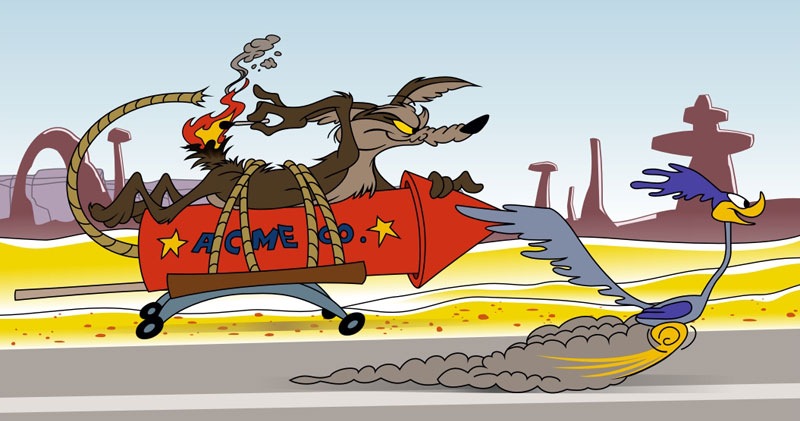
2 ways this scene can end.

wile-e-coyote-chasing-the-road-runner.jpg

Someone recently gave me an amazing business analogy, using Wile E Coyote. As surprising as that may seem, I just had to share it.

We all know how each of Mr. Coyote's attempts end. A "Super Genius" idea invariably goes wrong and our favorite antagonist gets injured. What is really interesting, is what he does next. More often than not the coyote tries something different.

As a result he lives in a world of perpetual experimentation with new ideas hoping each will help him achieve his goal. What he doesn't do, is spend time understanding what went wrong and improve the design of his contraption.

Wile E. Coyote almost always, immediately, assumes the idea was the problem, not the execution. Unfortunately, this approach is something I'm sure you have seen, I've run into it in my career too. It sounds like "We tried that once years ago and it didn't work", and with that, the idea is never re investigated.

We all know practice makes perfect in many area, like music, art, sports... golf. So why do we give up so quickly in the area of our business?

I've seen this problem often in applying technology, like CRM, to a business. The technology gets implemented, it fails to deliver the original lofty goals, and immediately it's explained away as something it isn't. Sometimes it's blamed on the tool, "We picked the wrong CRM", sometimes it's blamed on the situation, "Our industry isn't really the right one for this type of approach, we are more relationship based".

The truth is many companies are successful with idea and technology implementations, and many road runners, I'm sure, do get caught by coyotes.

Don't give up! It is possible!

A good idea is exactly that, Good and an Idea. Execution is something that takes time, practice, continuous focus and sometimes some experienced help.

question-mark-nothing.jpg

What implementation of a new idea would you like to see succeed?


How to improve your Relationship with CRM

CRM Collage Final.jpg

I think everyone knows what CRM is. (Raise your hand if you don’t.)

You’ve all heard about it. Many companies have purchased or subscribed to one of numerous excellent CRM platforms.

The truth is, there are very few bad CRM systems on the market. The difference, like all tools, is how you use it.

  • If you want a place to create a shared list of customers and contacts, most CRM system do that really well.

  • If you want to keep a log of all the times you visit a customer, almost every CRM system will let you do that (so will Outlook).

  • Do you want to run a mail campaign, track a lead, share opportunities with colleagues, integrate email or get an app? There are lots of great systems out there to help you do just that.

The challenge, is rarely finding a CRM with the standard functions you want. The real challenge is identifying what your business goals are, and then which CRM will help. Another way to look at it, what issues do you have? Will a CRM platform help you solve them?

CRM is a technology. Most salesmen already do the basic things CRM offers. Track customers, make a list of contacts, plan and record a calendar of visits and meetings. A CRM system will only centralize that information. Unless you take a different view of CRM.

  1. CRM as a system for connecting valuable knowledge in your organization to the correct customer.

  2. CRM as an intelligent source of insight into your customer and their fleet.

  3. CRM should tell you about opportunities you didn’t know existed.

When working with customers I often find most people are tracking, using CRM to track activity or lead status. Some are planning, as a team, processing leads or setting future activities.

Where CRM should be, for each of them, is a source of insight, a filter with which to focus knowledge and market information. The Relationship in CRM suggests that the tool can help you Relate to your customer.

For your CRM To bring you full value, it should integrate all sources of relevant data, handle your daily sales processes, analyze your customer data and provide indication of what the opportunities are for each customer.

When you consider these aspects, choosing the right CRM does get harder, but with the right implementation and focus you will get more value and enjoy a better Relationship with your Customer and with your CRM system.

question-mark-nothing.jpg

How is your CRM supporting your objectives?

Subscribe below to be notified of new articles on this topic.

Believing the Possible

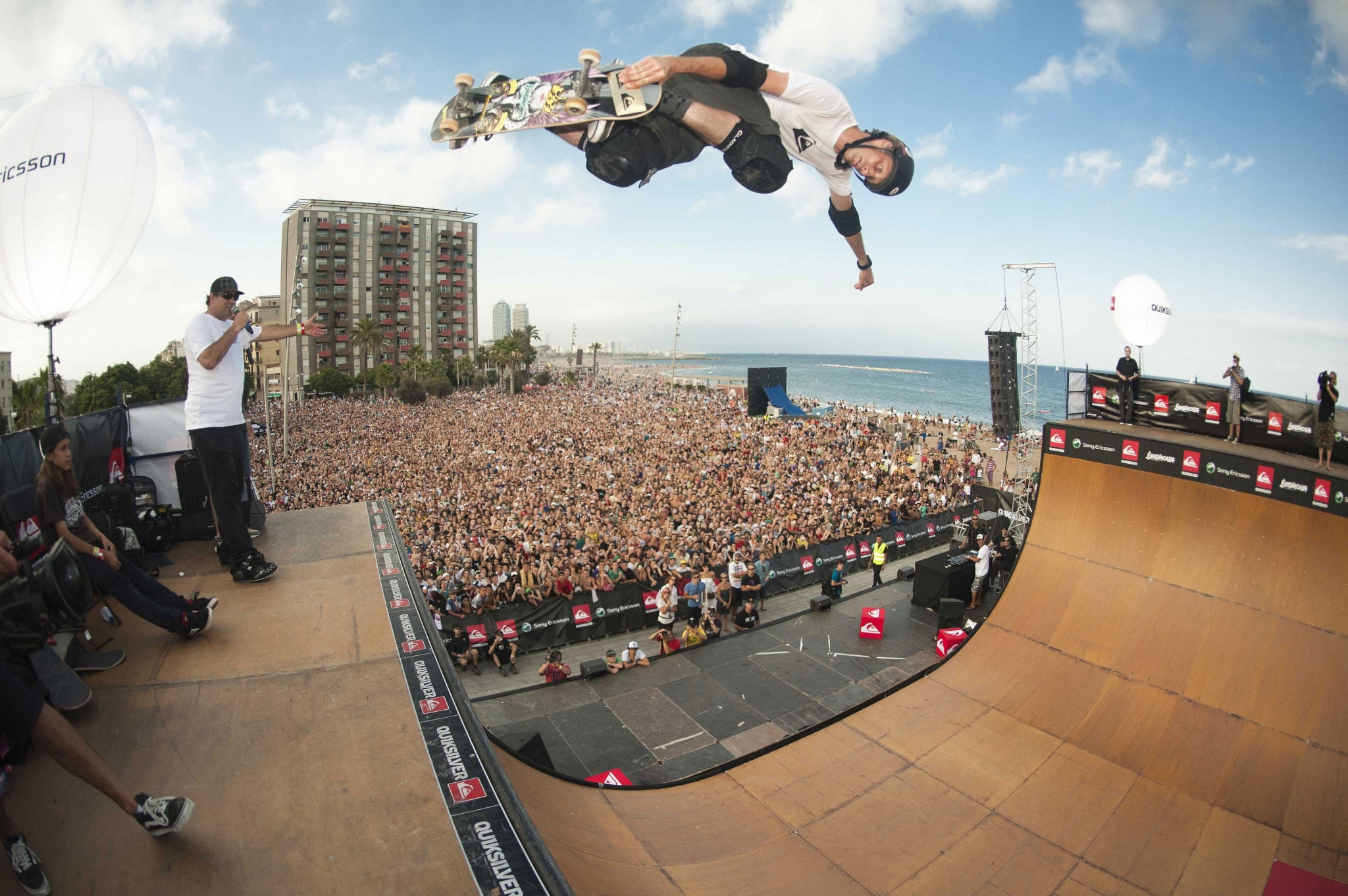
tony900_48.jpg

In an old interview with Tony Hawk, the topic of new tricks came up. In particular, Tony and the interviewer discussed the 900. In the 900, while airborne, the skateboarder makes two-and-a-half turns about their longitudinal axis, thereby facing down the ramp when landing. This trick is still considered one of the hardest tricks in skateboarding.

In the discussion, Tony spoke about the progression of new tricks. In the case of the 900, it took 10 years of working on the trick to get to the point of actually landing it. Until that point, Tony continued to pioneer the trick while many others were not sure it was possible. Then, once he landed the first 900 in the X games of 1999, many more skaters were able to perform the trick.

Tony identified that the key for those who will follow was believing it was possible. Once proven, many other skaters were able to complete the trick because they also believed it was possible. Tony had removed the barrier. He explained that executing something new was half in your head. In your mind there are barriers created by doubt. As a pioneer, Tony worked through the barrier in his own mind while attempting the trick. Each minor progression, in this case a few extra degrees of rotation, convinced him to continue as the goal came closer. Yet, not until completing it, did he also believe it was possible. For those who followed Tony, the barrier was removed by him; they now believed it was possible and wouldn’t have to work through the same mental progression.

The interesting thing is, the same happens in our work lives. While we aren’t literally trying to land a 900, in some sense, we are. Anytime we work with a team and try to achieve a new goal, we have to ask ourselves “does the team believe it’s possible?” If members of the team don’t believe the goal is possible, they will likely not achieve it. In fact, in some cases, they may subconsciously prevent themselves from achieving it.

For organization leaders or team leaders, it becomes important to be able to show, just like Tony did, that both the goal is achievable and also, how to get there. Without this, you may struggle for years to achieve the level of performance you expect.

This situation often happens when new managers come from one organization which has achieved the goal. While the new manager is a believer, the new team has not seen it or experienced it.

To overcome this challenge, some creative solutions need to be applied, depending on the goal and team involved. In the past, I’ve gone as far as planning a field trip with the team to other organizations who had achieved a similar goal. It might be that the vendors in your area are partners and destinations for such a field trip.

question-mark-nothing.jpg

Have you experienced challenges with belief in a team? What did you do to solve it?

Here is the link to Tony Hawk’s first successful landing of a 900 https://www.youtube.com/watch?v=4YYTNkAdDD8

Other notable moments:

Travis Pastrana attempts the first Motocross backflip (X games 2000), but doesn’t land it. Yet the announcers and crowd are stunned that he got that far. No one believed it was possible

https://www.youtube.com/watch?v=LYFNw2sq8sA

Finally Travis completes a double back flip a few years later

https://www.youtube.com/watch?v=S2VFxVEglc8

Choosing People

campfire-at-night.jpg

This Canada day I had the privilege of joining a friend’s extended family over the long weekend.

We went up on Friday of the long weekend, we got the invite from a cast mate of my wife’s from her last show “Jukebox Hero”. He came from a small town in northern Ontario, a small rural town surrounded in farmland. We arrived in the afternoon to what was at one time a farm but now a partially cleared campground. This campground was not covered in tents but a neatly organized town of very nice RVs. Of course as many of you know, each RV comes with a 3/4 or 1 ton truck to pull it and we arrived in a Mini Cooper Convertible, we clearly did not get the memo.

We rolled through this extended family noticing family members sitting in small groups around one RV or another already enjoying their weekend. Sam’s cast mate met us near the back end of the property and showed us around the pond to the back where there was a nice grassy area. There we proceeded to set up my very sturdy, odd and somewhat geeky Dutch camping tent. While we built it we got lots of looks but more than anything we got welcoming comments, offers of help, tools and several drinks delivered. We were starting to feel more than welcome.

After we finished the tent, the party started. We were invited to 2 dinner BBQs, offered numerous refreshing drinks and given a tour of the property. This included warm hugs and introduction to not just the cast mate’s family but friends and neighbours from their home town; which was only 3 kms away.

As the night progressed I played bartender for a while and started to get to know people in the camp. I found myself sitting around the largest camp fire I can remember, a used heating oil tank cut in half and each side filled with chopped wood and burning. There was no chance of getting cold.

I fell into conversation with one of the women sitting beside me. She started to tell me about the group and the town, and telling me the names of about 10 other women sitting alongside the fire. These 10 were part of a slightly larger group of, all friends. They all grew up together in the nearby town, went to school together +/- a couple grades. Some worked together, they attended each other’s weddings and helped raise each other’s kids. Some had been through hard times, sickness, divorce and other losses, but they had helped each other through it. So now after life as friends for 40-ish years they were still getting together each long weekend to spend time together. It was obvious from the stories I was told that they did not always see eye to eye or agree with each other’s actions, but they were ALL still here.

It was at this point that it hit me, these women CHOSE to be friends. Regardless of experience, events or personalities they CHOSE to be friends. They did this by CHOOSING to see the positives in each other, and CHOOSING the benefits of long term friendships over the aspects of each other’s personalities they didn’t like. I realized that with almost all the relationships in our lives, whether family, friends or work we choose to see the characteristics and abilities in people we want to see. We can focus on the positive items or the negative, yet it seems all too often we get stuck on the negatives and isolate ourselves.

The same is true at work, especially in team building. In 2004 I had the opportunity to build a new department, inside the dealership, from scratch. I decided that credentials and skills were not going to be the only thing I looked at. I looked for people that liked to work with other people. People that saw the positives in each other. The result was a department that achieved it’s goals, but also became the department and team others wanted to join.

This brings me back to why I do what I’m doing at Strategic Evolutions.

I like working with people, I like to help find their strengths and the positive aspects of each one. I focus on those when organizing a team to achieve a goal. I also try and focus every member of the team on the same thing. What strengths do they believe they bring to the team, and what strengths do they see in each other?

To be a successful team each member needs to CHOSE to to succeed, CHOSE to work together and CHOSE to find the strengths of their team mates. Without this decision it’s much too easy to find fault, point fingers and fail.

Finally, I have found, generally retrospectively, that this CHOICE is often part of a culture in a company. While each person may have different inclination coming into the company, the culture they find there determines how they will act. Maybe it’s as simple as feeling there is a common goal, finding support or finding someone that immediately sees the best in them.

I’m not sure what it was that made this group of women at the campfire CHOSE to be friends regardless of differences, but I’m thankful meeting them helped me to understand.

I wonder, do you understand why you CHOOSE to like certain people, and at work do you make the same CHOICES? If you’re considering your company culture, is CHOOSING each other’s strengths over weaknesses part of it?

question-mark-nothing.jpg

If you’re considering your company culture, is CHOOSING each other’s strengths over weaknesses part of it?